By Charlene Maldonado
October has always been a meaningful month for me. There is something about this time of year that makes me slow down and reflect. The cooler mornings, the changing leaves, the feeling that one season is giving way to another. It always brings me back to why I do this work and why it matters so much to me.
I was not able to have biological children of my own. Because of that, the stories of the children I advocate for have always touched something very personal in me. Their needs matter to me. Their voices matter to me. This work filled a space in my heart that I didn’t fully understand until I became part of it.
But advocacy was not something I first learned through CASA. Advocacy was something I first learned at home.
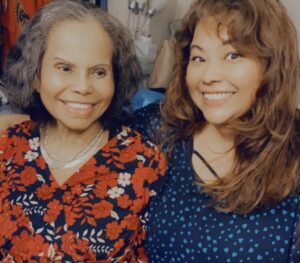
My mother was an immigrant, and throughout my life there were times when I had to help her navigate systems that were unfamiliar to her. I read documents for her, translated information, explained paperwork, and helped her understand what people were asking of her. I sat beside her when systems felt confusing and overwhelming.
My mother passed away in July, and since then I have found myself thinking about those moments differently. I realize now that some of the earliest advocacy I ever did was for her. I was just her daughter, doing what I thought needed to be done. But I was also helping someone I loved understand systems that were not always easy to navigate.
That experience stayed with me.
I celebrate Shimaine (Maine) Holley every day, but her birthday in October has always held a special meaning for me. I have had the privilege of watching her grow from a young person navigating foster care into the strong, confident woman she is today. Watching that growth has been one of the most meaningful parts of this work. When I first entered child welfare, I thought I was here to save children. What I didn’t realize was that, in some ways, I was also looking for healing of my own.
A Story from the Early 1990s
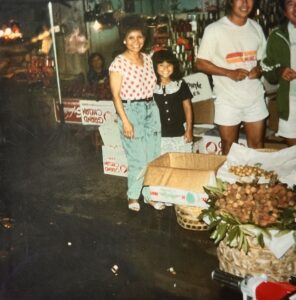
The first story I want to share takes us back to the early 1990s. It is the story of a girl named Linda. Linda was often described as a problem child, a runaway, or impossible. People saw her behavior, but not always the pain behind it. Linda had experienced trauma and struggled with her mental health. Her mother was a single parent and an immigrant who did not have the support or information she needed to fully understand what her daughter was experiencing. At the time, there was much less understanding of trauma, mental health, and how both can affect children and teenagers.
As Linda’s behavior and mental health struggles became more difficult to manage, the systems around her became involved. What was missing was someone who could look at the whole picture, listen to Linda, and make sure her voice was heard. At 17, following a mental health crisis, Linda entered foster care. Her 8-year-old sister watched as she was removed from their home. During the year Linda was in foster care, only two visits were allowed. That was a painful contrast to some of her earlier experiences in mental health facilities, where frequent family days allowed for connection and contact. Without consistent family contact, Linda became quieter and more withdrawn. The bright, artistic girl she had once been seemed to disappear a little more each day. She spent long hours looking out the window, waiting for someone to speak up for her.
Fast-Forward to 2015
Fast-forward to 2015, my first year working with a CASA program.
That was the year I met Maine. Maine was bold, expressive, funny, and full of energy. She had experienced foster care more than once and, like Linda, was a survivor of trauma. Their stories had similarities, but there was one very important difference. Maine had an advocate. Through the CASA program, she had someone helping her navigate school, therapy, medical care, and the many things that can become overwhelming when a young person is involved in the child welfare system.
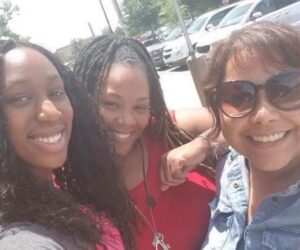
Someone showed up. Someone listened. Someone helped make sure her needs were understood. Maine did more than make it through the system. She found her voice and learned how to use it. She became an advocate for herself and for other young people. She used her lived experience to help create change and even contributed to federal legislation supporting older youth in foster care. Her light never faded.
Why October Feels Different for Me
The year Maine turned 18 was the same year I lost my sister, Linda.
Linda carried her trauma and mental health struggles for decades. She left behind two daughters and grandchildren, but her story never had the advocacy that might have helped change its direction. Linda and Maine shared similar beginnings. They even shared October birthdays.
Two girls. Two very different paths.
I often wonder what my sister’s life might have looked like if someone had stood beside her. If someone had asked the questions that weren’t being asked. If someone had helped her understand what was happening to her. If someone had made sure her voice was heard.
I will never know the answer. But I do know what advocacy meant for Maine.
What Advocacy Gave Me
As Maine’s advocate, I was able to give my sister a voice, even though it came too late for Linda to hear it. Through Maine, I found words I didn’t have as a child. I was no longer the scared 8-year-old sitting quietly in a room full of adults using words and language I didn’t understand. I became an adult who could sit at the table, ask questions, speak up, and make sure a child was heard.
And in some ways, I recognize that same little girl in the advocate I became for my mother. I spent years helping her navigate documents, translating information, explaining systems, and making sure she understood what was happening around her. I didn’t think of it as advocacy at the time. I was just her daughter. But now I understand that it was. Advocating for my mother taught me something I carry into every part of this work: having someone beside you can make an overwhelming system feel a little less overwhelming.
Advocating for Maine also gave me a way to honor my sister. When I celebrate Maine, I celebrate her success, her strength, and everything she has accomplished. But I also think about Linda and the hope I wish she could have experienced.
And now, after losing my mother, I find myself thinking about her too. About all the times I sat beside her, read something she needed help understanding, translated something for her, or helped her navigate a system that felt unfamiliar.
My mother, my sister, and Maine. Three women who, in very different ways, taught me something about what it means to use your voice for someone else.
That is why October feels different to me. It holds birthdays, memories, loss, growth, and a reminder of why advocacy matters.
Happy birthday, Maine.
And happy birthday, Linda Jean.
Why CASA Matters
CASA is about more than caring about children. It is about advocacy, consistency, and making sure a child’s voice doesn’t get lost in a complicated system. It is about providing an independent voice to the court and helping bring stability to a process that can feel overwhelming for children and families. It is also about changing the way we talk about children in foster care. They are more than their case files, their behaviors, or the circumstances that brought them into care. They are children with strengths, dreams, talents, and potential.
October reminds me that loss and growth can exist at the same time. Some things end. Some things begin. And sometimes, the people we meet along the way help us understand parts of our own story that we weren’t ready to understand before.
I am grateful for the mission of Georgia CASA and proud to serve as the Executive Director of Dougherty County CASA, where every day we work to make sure children have someone willing to stand beside them and speak up for them.
Because every child deserves an advocate.
And every story deserves the chance to be heard.
As an organization dedicated to supporting children and families in crisis, we recognize that holidays can be a delicate and nuanced time for many. In this series, Purposeful Perspectives, we asked our staff and board members to select a season, month, or day that is meaningful to them to share with our CASA community. Thank you for joining us as we take a deeper look behind the celebrations that fill our lives.
Featured Posts
Purposeful Perspectives: Why Advocacy Is Personal for Me
For October's Purposeful Perspectives blog Executive Director of Dougherty County CASA, Charlene Maldonado, reflects on what October means to her.
Advocacy in Action: Seeing the Whole Family to Serve the Child
"One of the greatest rewards of being a CASA volunteer comes long after the court hearings have ended, and the case has been closed. Occasionally, a text message, photograph, or email arrives unexpectedly. It may be a picture of a child smiling on the first day of school, celebrating a birthday, earning an award, or simply enjoying life with family. Those moments are powerful reminders that our work extends beyond court reports and recommendations. They remind us that the relationships we build and the advocacy we provide can have a lasting impact on a child's life."
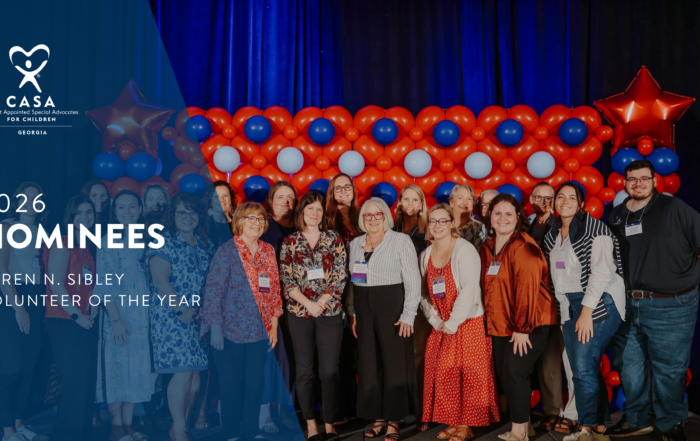
Meet 2026 Volunteer of the Year Nominees!
CASA volunteers are everyday people with a special heart to serve the best interests of children experiencing foster care. In Georgia, thousands of amazing CASA volunteers serve children and families in crisis every day. One way we honor and acknowledge this exceptional work is through our annual Awards of Excellence. Volunteers are nominated by local CASA programs for our annual Karen N. Sibley CASA Volunteer of Year Award and the recipient is honored at the Annual Conference Luncheon every August. Let's meet this year's nominees for Volunteer of the Year!